
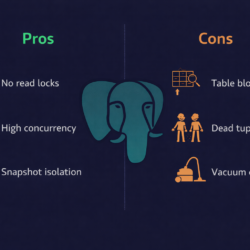
PostgreSQL MVCC trade-offs — concurrency benefits versus table bloat and vacuum overhead

MVCC Concurrency Architecture: PostgreSQL way of implementation – III( pros/cons)

We have explored the PostgreSQL implementation of MVCC in the last two blogs. We will understand the pros and cons of this way of implementation in this blog. PostgreSQL MVCC Pros and Cons in Production Understanding the PostgreSQL MVCC pros and cons helps DBAs make informed decisions about vacuum tuning, table design, and when bloat Read more about MVCC Concurrency Architecture: PostgreSQL way of implementation – III( pros/cons)[…]
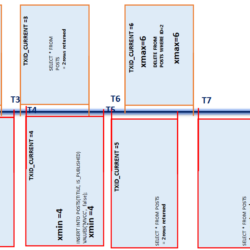
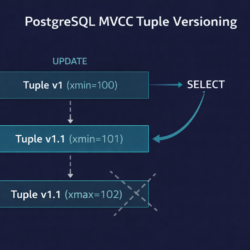
PostgreSQL MVCC tuple versioning showing xmin and xmax values across insert, update, and delete operations

Concurrency Control in PostgreSQL

In previous blog, we have detailed out about the inception of PostgreSQL. In this blog, we will explain the architecture (MVCC) with respect to PostgreSQL. Concurrency Control: There are more than one way to provide concurrency control by database. Concurrency is an important factor to allow many users to work on the same dataset at Read more about Concurrency Control in PostgreSQL[…]